

How Smart Engineering Unlocked a Step-Change in Cement Binder Conveying Performance
Upgrading a Cement Binder Transfer System from Lean-Phase to Dense-Phase Pneumatic Conveying
Increasing plant throughput is rarely as simple as installing a larger piece of equipment. More often, it requires understanding how materials behave, identifying the root causes of operational constraints, and designing a solution that improves both performance and reliability.
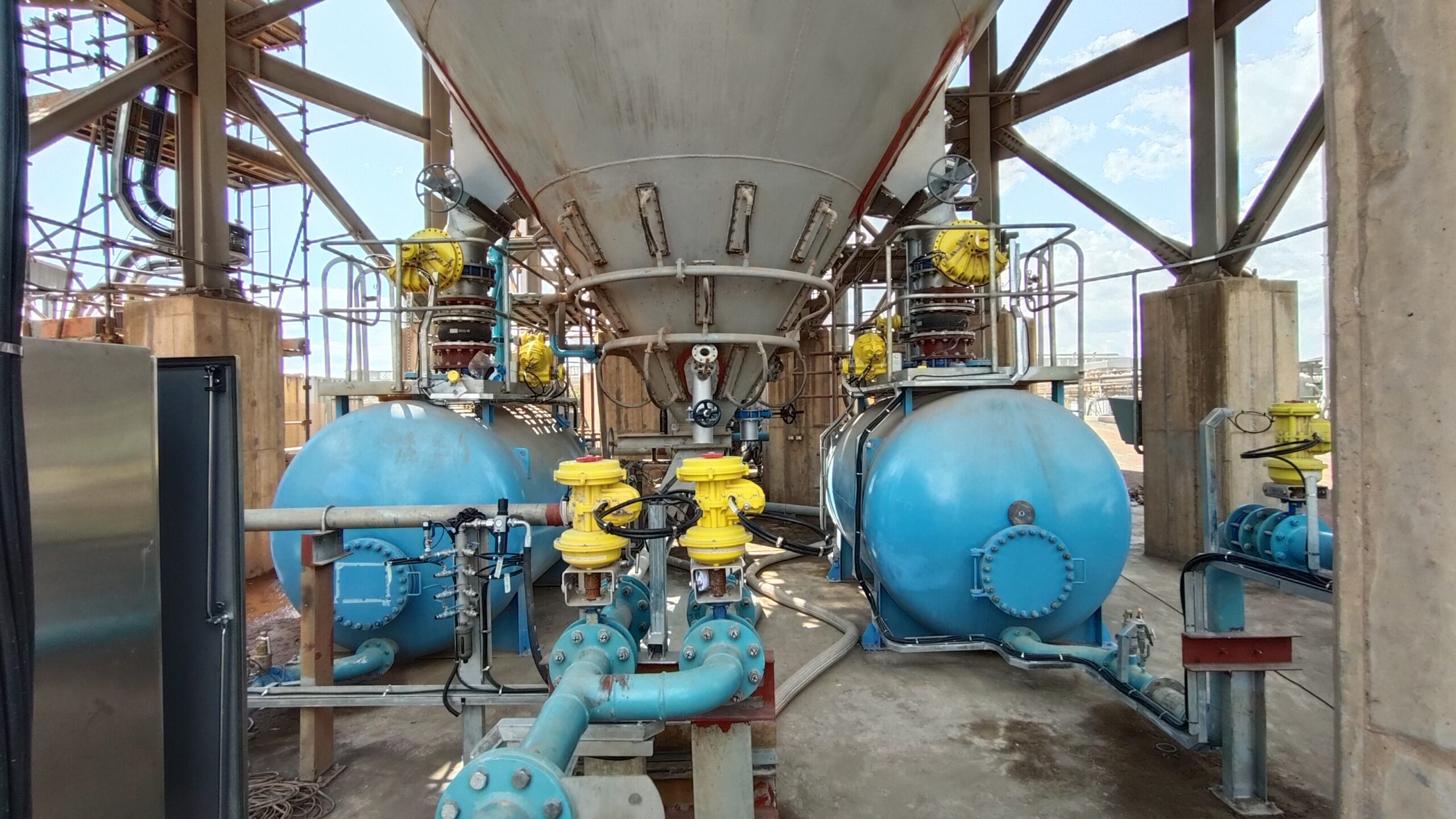
Recently, our team commissioned an upgrade to a cement binder transfer system for a major copper producer in the Democratic Republic of Congo (DRC), increasing its conveying capacity from 15 tonnes per hour to 70 tonnes per hour. The project involved replacing the existing lean-phase pneumatic conveying system with a tandem-vessel dense-phase pneumatic conveying system, providing a significant increase in throughput while improving overall system reliability.
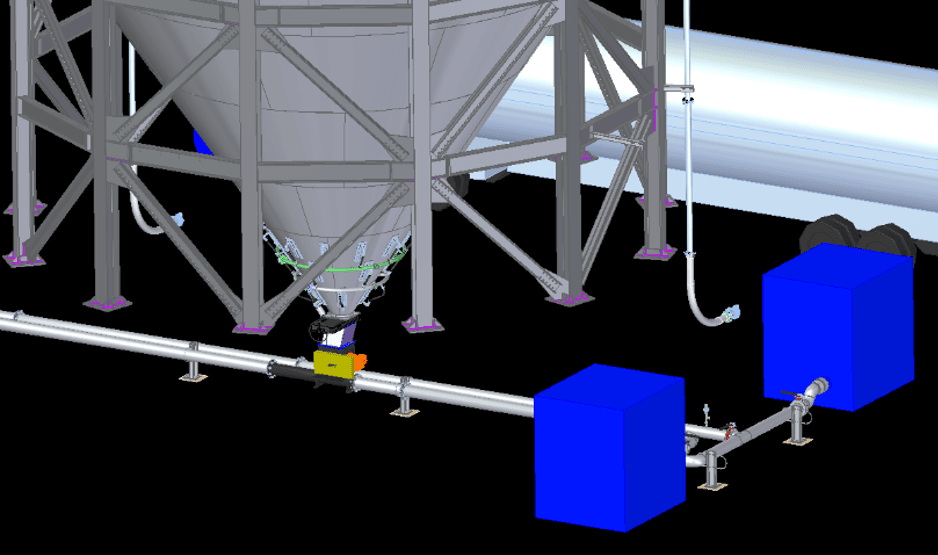
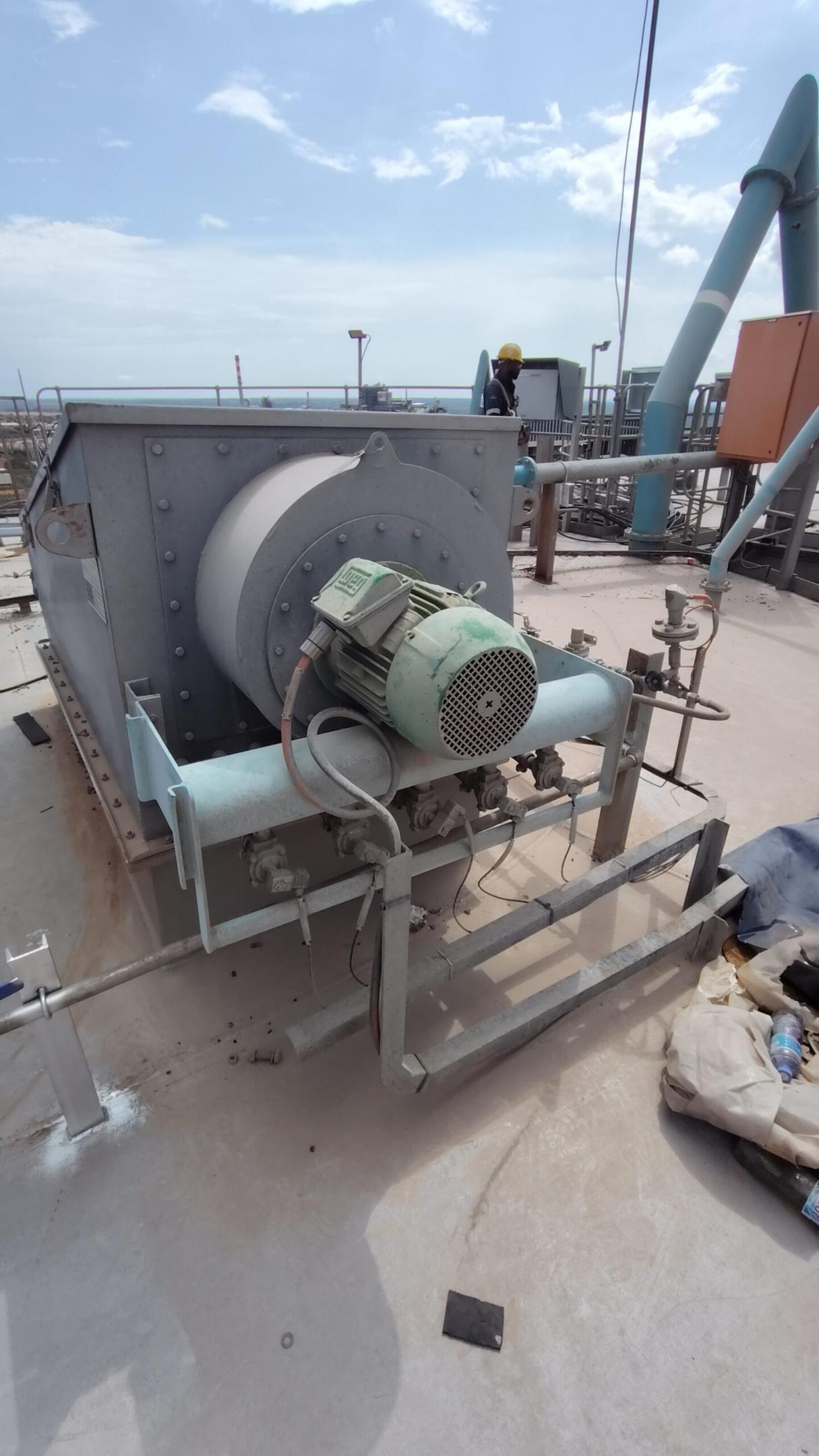
Before the upgrade – 15 ton/hour lean-phase conveying setup including blower
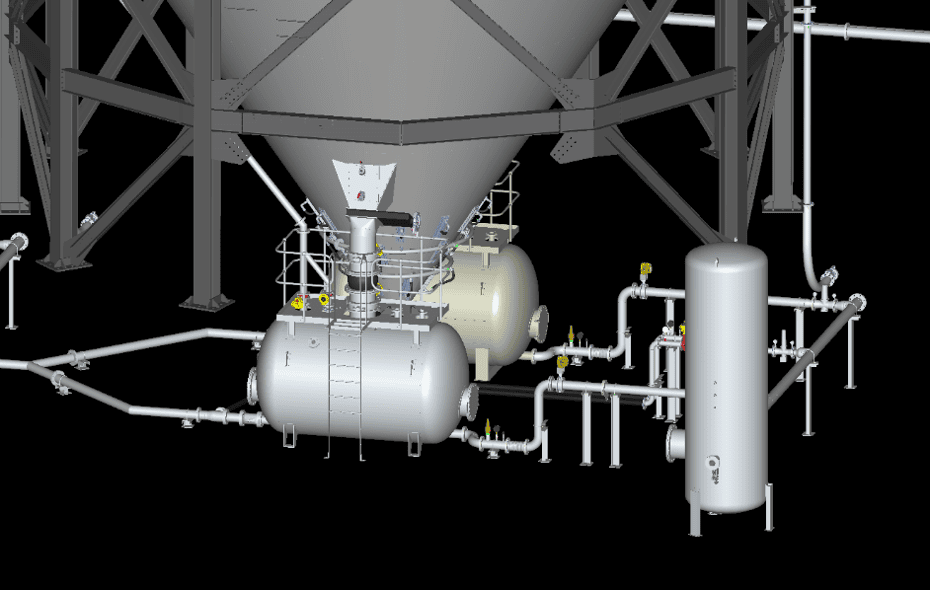
This dual-vessel dense-phase system with a compressed-air receiver delivers 70 ton/hour throughput
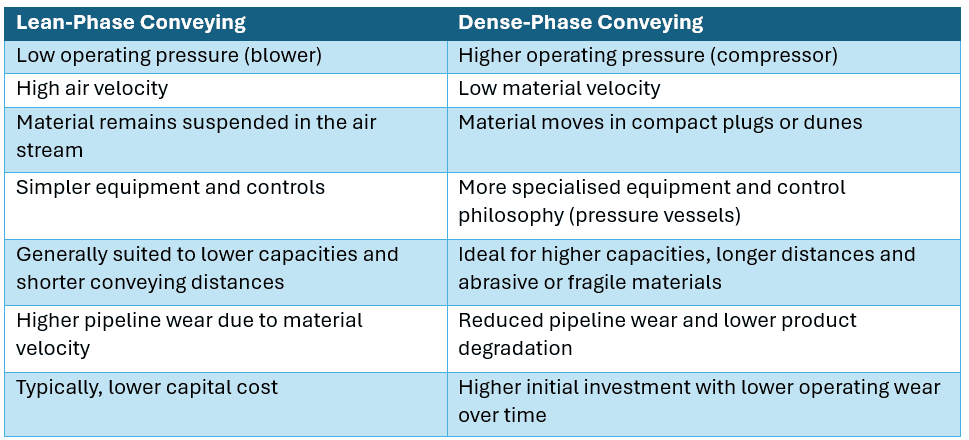
Understanding the Difference: Lean-Phase vs Dense-Phase Conveying
For those outside the bulk materials handling industry, both systems use air (pneumatic conveying) to move powder through pipelines—but they do so in very different ways.
In this application, the higher throughput requirement made dense-phase conveying the clear choice. By conveying the product at a much lower velocity, the new system delivers significantly more material while reducing pipeline wear and improving long-term reliability.
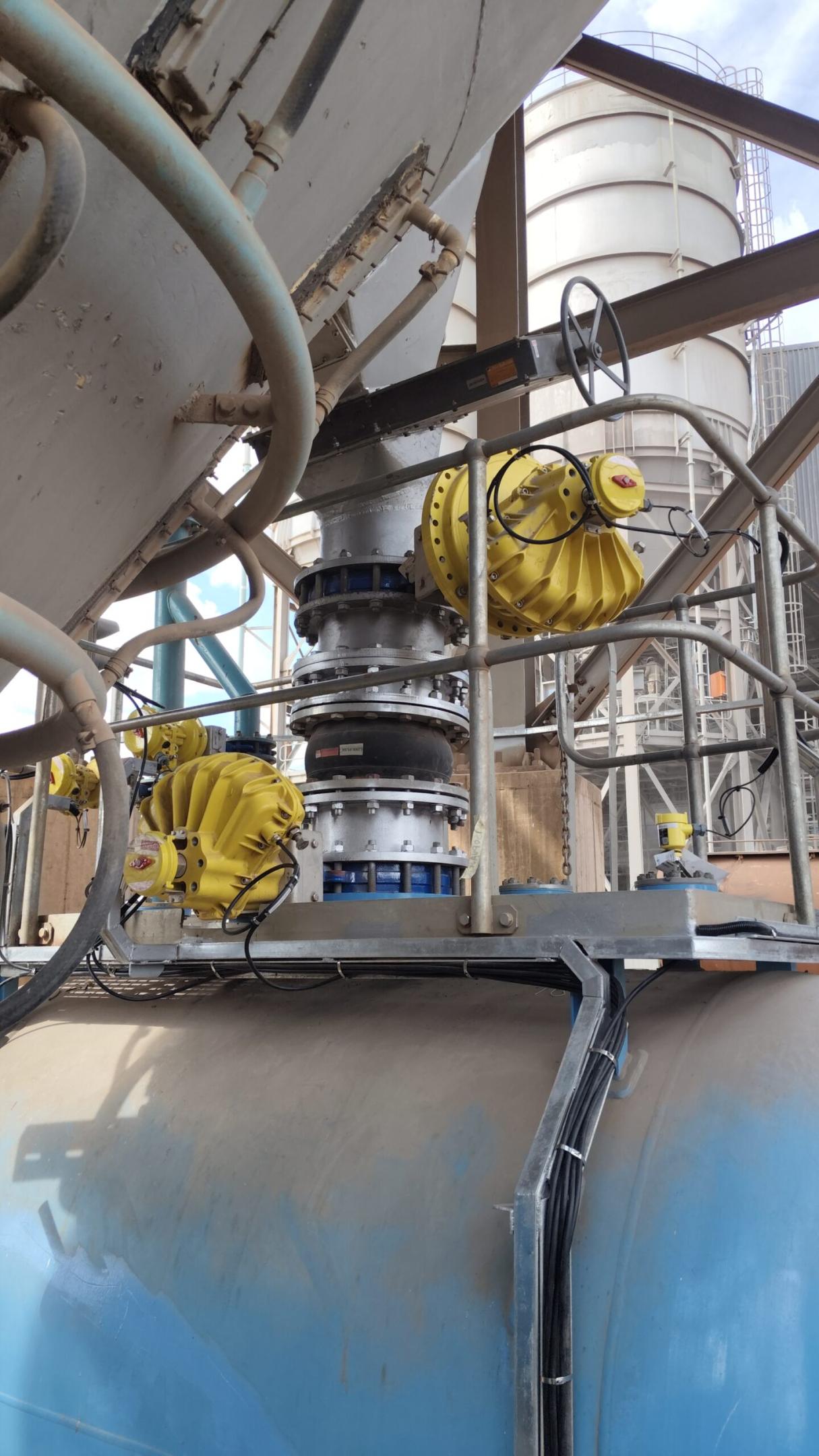
While the increase in capacity is impressive, the real success of the project lies in solving the operational challenges that accompanied it. One example was the low available clearance below the existing silo. That prevented the installation of traditional vertical conveying vessels. Techmatic had pioneered horizontal vessels in a previous project to overcome height restrictions, and this design was chosen on this project for the same reason.
Dual vessel compared to single-vessel conveying increases capacity and efficiency by ensuring that the pipeline is continually full of cement during conveying. That converts a batch process with full emptying of the pipeline between batches to a continuous conveying process that utilises compressed air more efficiently and increases the conveying capacity significantly.
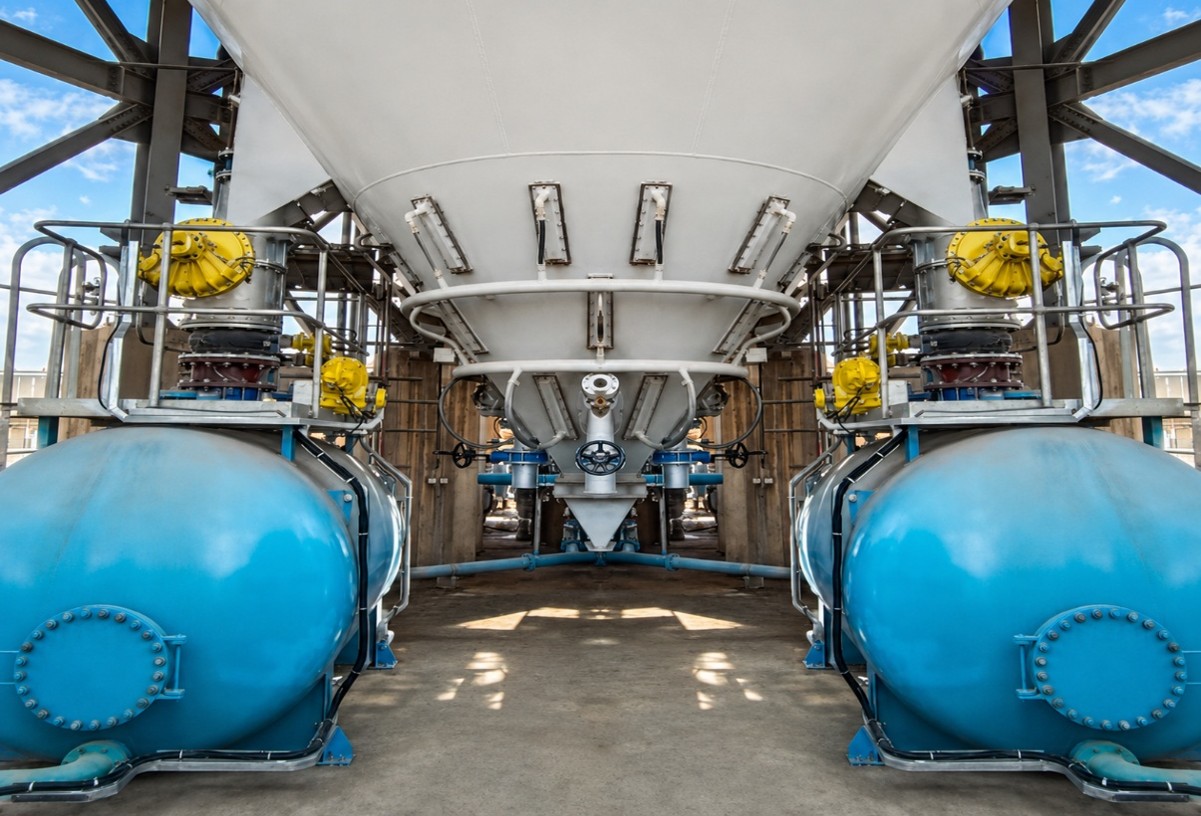
Dual-vessel dense-phase system beneath the storage silo
Looking Beyond the Conveying System
One of the most valuable lessons from this project was that conveying equipment alone was not the plant’s only bottleneck.
Due to operational challenges, the cement binder is at times offloaded into the storage silos at temperatures exceeding 130°C. The elevated temperatures are generated during road tanker offloading, where onboard compressors compress air to be used to pneumatically transfer the product into the silos.
As the heated material cools inside the silo, moisture may condense within the storage environment. Cement binder is highly sensitive to moisture, and even small amounts can initiate hydration and local solidification. The result is the formation of hardened lumps that accumulate around the silo discharge, leading to intermittent blockages, inconsistent material flow, and unnecessary production interruptions.
Rather than treating the symptoms, the project focused on eliminating the conditions that allowed the problem to develop.
Engineering the Complete Solution
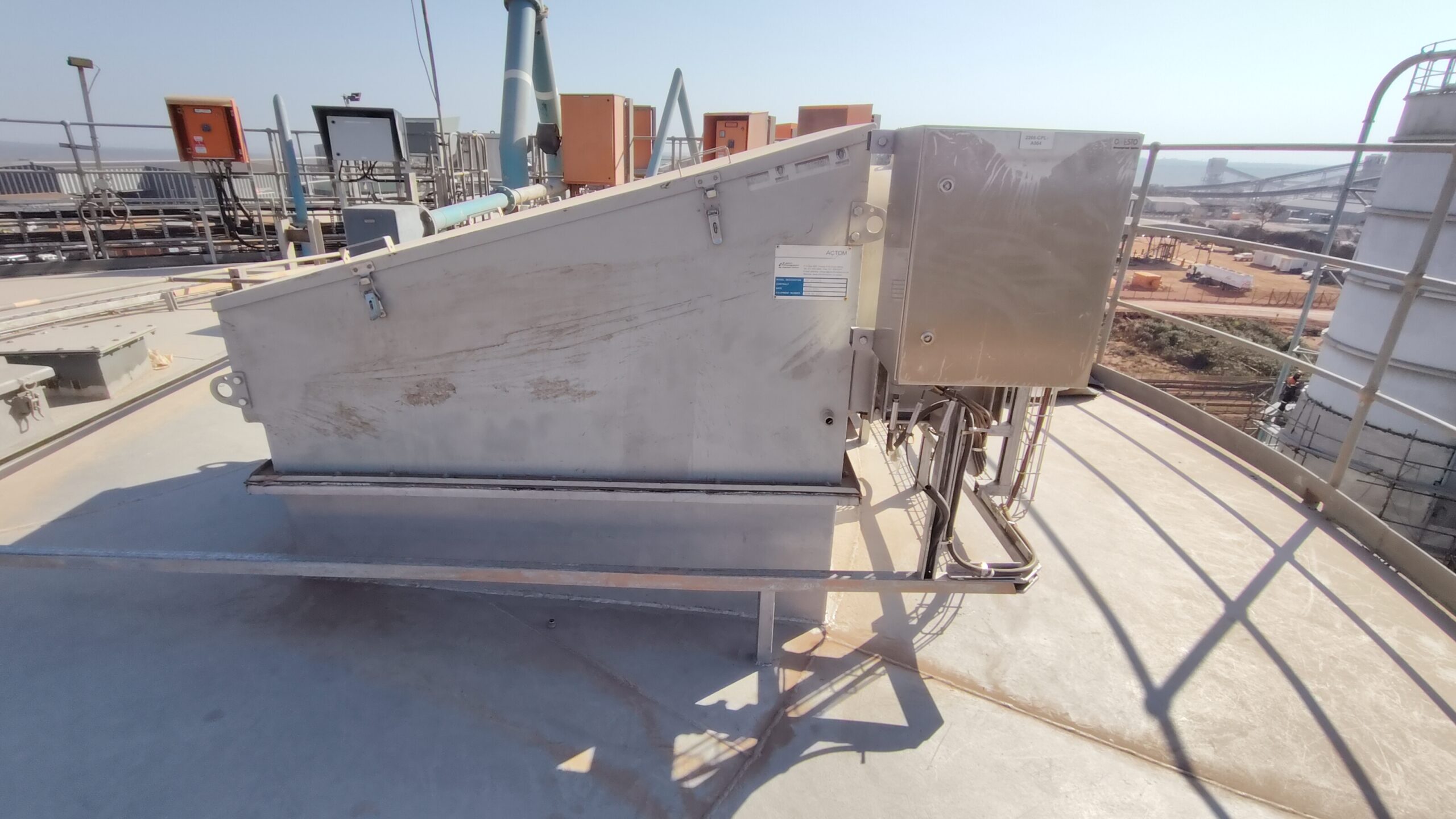
To maintain a dry storage environment, dehumidification units were installed to continuously supply dry air to the silos whenever road tankers are not unloading. During tanker offloading, reverse-jet dust filters vent displaced air and entrained dust from the silos, allowing hot air to escape while maintaining effective filtration. Together, these systems help reduce the likelihood of condensation forming as the stored product cools. Addressing the storage environment alongside the conveying upgrade ensures that the increased throughput can be sustained without introducing new reliability issues downstream.
More Than Higher Throughput
Projects like this highlight that successful material handling is about more than moving product faster. It requires understanding how materials interact with their environment and designing systems that perform reliably under real operating conditions. We at Techmatic have over 40 years of materials handling experience that lends itself well to our clients’ challenges.
By combining increased conveying capacity with improved storage conditions, this upgrade has delivered a more robust solution that supports production while reducing maintenance interventions and operational disruptions.
In Part 2 of this series, we’ll explore the second stage of the upgrade: modernising the dosing silo system feeding the paste mixer, and how improvements in flow control and dosing accuracy further enhanced overall plant performance.
Contact Us
With over 40 years of engineering experience, Techmatic Engineering supports clients in designing, troubleshooting, and optimising bulk material handling systems. Need technical assistance with conveying, storage, or process performance challenges?  Contact our team at salesjhb@techmatic.co.za or fill in the form below.